
As op-ed writers, we often find ourselves writing about something negative, trying to inform the public about a problem that needs fixing. But I wanted to start 2024 with a win, to find a story to be hopeful about in the coming year.
So I looked to a swath of privately owned ranchland in the western part of the state, where this past November a cadre of volunteers including biologists, veterinarians, students, and zoo personnel headed into the dark of night looking for the “eye-shine” of one of North America’s most endangered mammals.
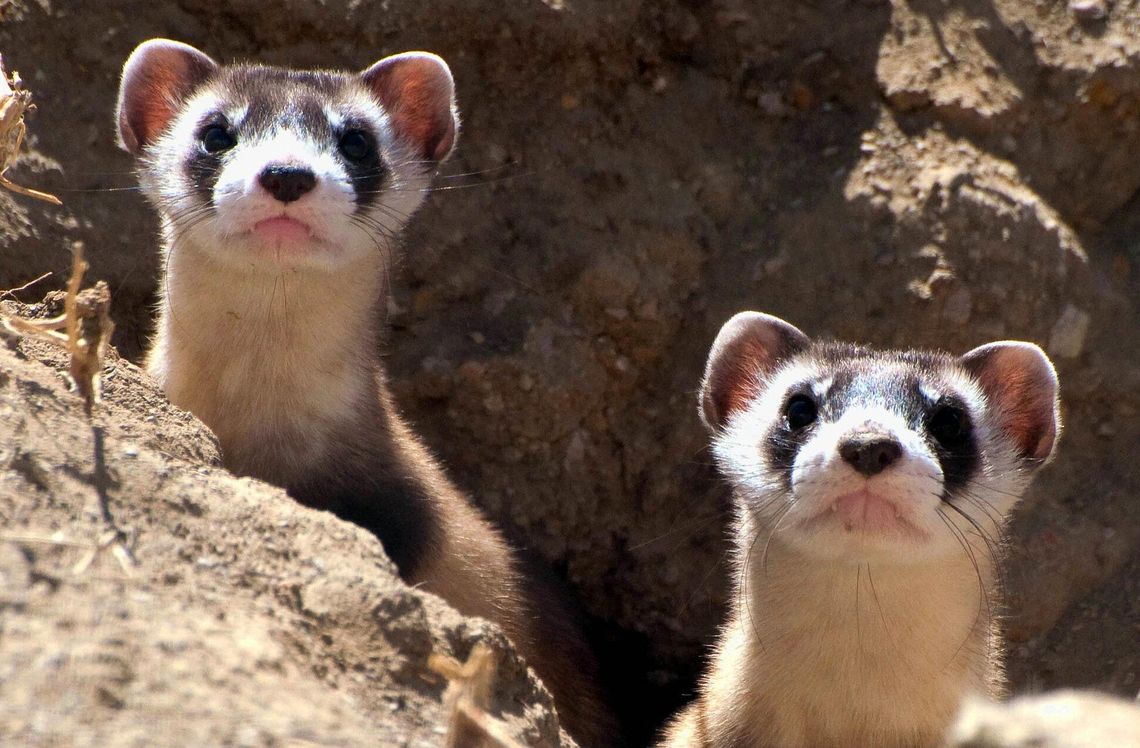
The black-footed ferret is a bit of a mystery. Members of the weasel family, they are a slender bundle of both endearingly playful antics and black-masked ferocity. They are predators, nocturnal, and live most of their lives underground, so they are difficult to find and even more difficult to study. Much of what is known about them is learned in captive breeding centers, which the species has been dependent upon for survival because not once, but twice, has the animal been considered extinct, a victim to its own vulnerability to disease, the systematic eradication of its primary food source and loss of its prairie habitat.
When biologists noted a decline in the last known wild population of black-footed ferrets — rediscovered in Wyoming in 1981 thanks to a roaming ranch dog named Shep — they trapped several animals and began a captive breeding program. Today, thanks to the collaborative efforts of the U.S. Fish and Wildlife Service, multiple American Indian tribes, zoos, conservation groups and private landowners across the West, these captivating little creatures have a fighting chance.
“We are very optimistic,” said Marty Woolard Birrell, who has been involved with the recovery of the black-footed ferret in Kansas since it began in 2008.
According to Birrell, the first and second generations of reintroduced ferrets are surviving through natural selection, and volunteers have seen consistent reproduction and good population densities across the entire reintroduction site.
They’re “wilding up,” she said of the ferrets, which are becoming more adept at surviving in their natural habitat. She says much of the credit for the success story goes to the multi-generational ranching family that owns the land.
“Their excellent ecological grazing practices have kept the prairie healthy, and healthy habitat is key to healthy ferret populations,” Birrell said.
This is important because Kansas, like most states in the West, has not had a particularly positive relationship with its prairie wildlife. In 1903, the state added a law to the books (which remains and is acted upon today) that required communities and ranchers to kill prairie dogs because the rodents were seen to be competitors for the prairie grasses that feed cattle. With great vehemence, the state attempted to eradicate the prairie dog, much to the detriment of the prairie ecosystem.
As a keystone species, the role of the prairie dog cannot be underestimated. The rodent is the primary food source of the black-footed ferret, and ferrets make their homes in abandoned prairie dog burrows. But it is not only the ferret that is endangered by the extirpation of the prairie dog. Burrowing owls, swift foxes, golden eagles and a multitude of other species also rely on the animal’s existence. When poisons are used against prairie dogs, not only do their populations decline but the many species that feed on them become collateral damage.
But things are — albeit slowly — changing.
Landowners are beginning to recognize, especially in the face of drought, that it is financially beneficial to graze livestock in more sustainable ways, allowing the natural cycle of nutrientrich grasslands to progress. Recent studies show that the presence of prairie dogs can enhance the quality of those grasslands, short-grass prairie in particular. By supporting a balanced ecosystem on their land, many ranchers are finding that while the prairie dogs do compete to a degree for forage, the quality of the forage is greatly improved.
Allowing the keystone species to remain can be a benefit to the rancher and in turn, to one of the state’s most endangered native species: the black-footed ferret.
Currently, Kansas’s recovery program is hoping to find two additional properties where it can release ferrets. Birrell is hopeful. She sees a shift in attitudes, especially in younger generations of ranchers. Kansans in general are asking for better conservation efforts for the state’s wildlife and wildlands.
So that is a win to begin the year, at least in my book.
Shawna Bethell is a freelance essayist and journalist covering the people and places of Kansas, Nebraska and Missouri.