During World War II, women played a vital role in the war effort, both home and abroad. Women worked in factories producing munitions, ships, planes, tanks, and bombs. They also worked in schools, hospitals, offices, construction, steel, lumber, and agriculture. Women volunteered with the Red Cross and served in the military in non-combatant roles. Women’s participation in WWII increased their economic and social opportunities and contributed to the Allied victory.
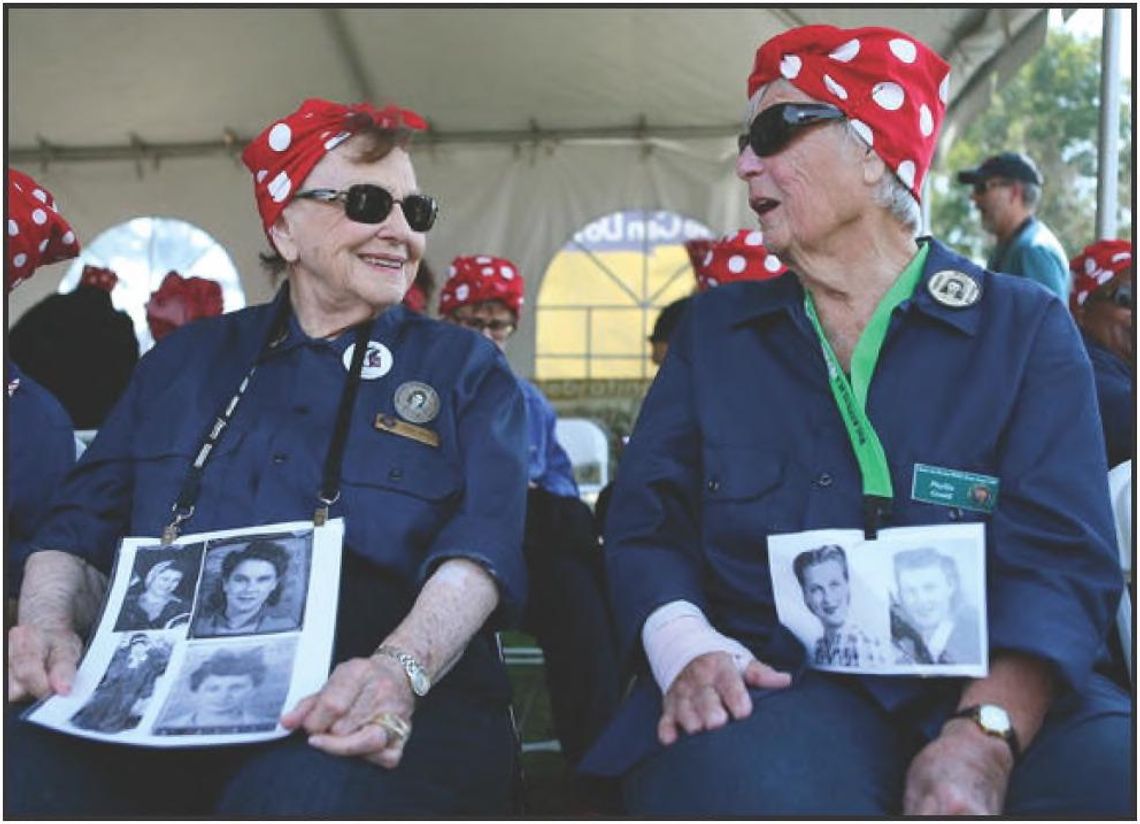
One of these women, Phyllis Gould, was a new mother when World War II began, but that did not stop her from being a part of the war effort. In fact, she became a symbol of America during the war, as one of the six original Rosie the Riveters.
She took a two-week class in welding and convinced her sister to take care of her infant son. She sought work in the shipyard near her home in Richmond, CA. Time and time again she applied for work only to be rejected. She persisted, however, until eventually she and five other women were hired. Over time, she became a journeyman welder.
These women worked hard on the home front taking care of their homes, families and often, succeeding in their new work environment. They worked hard abroad as well, many serving in as nurses in the field.
After the war, the men (and women) returned home, hoping to restore the lives they led prior to the war. One by one, women who had sacrificed much in order to help their country were dismissed from their jobs so that returning soldiers could take their positions. The country seemed to forget about these women - all six million of them - and the quality of work they had performed.
They were expected to forget how it felt to be independent, to have control of their own money and the satisfaction of knowing they were productive members of society, so those who served active duty could forget the atrocities of war, returning to the lives they had led before WWII.
Phyllis Gould was determined to change that.
Gould helped establish a museum and make March 21 “National Rosie the Riveter Day.” She wrote hundreds of handwritten letters lobbying for a Congressional Gold Medal for the Riveters. Her efforts paid off. At the time of her death, she was working to design the award, which will be given out next year.
She took that tenacious work ethic home with her too. She built a log cabin with a hammer and nails. At age 92, she joined fellow Riveters at the White House, a lifelong dream of hers.
She logged a life well-lived in her meticulous journals, writing, “I still have places to go and adventures to live.”
“She wants on her gravestone: ‘Mission Accomplished,’” her sister, Marian Sousa, told the San Francisco Chronicle. “I think she did it all.”
Gould died in 2021 at the age of 99.