There are certain things in life that have traditionally been categorized as a blessing. A happy marriage, a financial windfall or the birth of a child fall into this category, as do many others.
Occasionally those blessings come before we are ready for them. In the case of childbirth, those early blessings are premature births and come with many challenges.
The gestational period for a human embryo is 40 weeks. A baby born before the 37th week is considered premature.
A newborn born between 34 and 36 completed weeks of pregnancy is considered a “late preterm” birth. Most premature births occur in the late preterm stage.
“Moderately preterm” births occur between 32 and 34 weeks of pregnancy, “very preterm” are births that happen between 28 and 32 weeks and “extremely preterm” are births before 28 weeks of pregnancy.
Some babies, especially those born after 33 weeks of pregnancy, may have very few health problems. Other babies may show more serious symptoms of premature birth. The earlier a baby is born, the higher the risk of health challenges.
Premature babies are typically small in size, with a head that is large compared to the body. They may also have sharper and less rounded features than a full-term baby’s features due to a lack of cells that store fat. Early babies might also have fine hair covering much of their bodies; a low body temperature following delivery; trouble breathing and feeding problems.
A premature baby may have lungs that didn’t have time to fully develop in the womb. This may lead to respiratory distress syndrome or sleep apnea. While not as common, babies could also get bronchopulmonary dysplasia. In this case they will need oxygen for a few weeks or months, but often outgrow the problem.
Heart problems, digestive problems, temperature control issues, blood problems, jaundice, problems with their metabolism and a higher risk of illnesses due to an immune system not fully developed are all complications a preterm newborn might experience on the short term. Long-term complications are very serious including cerebral palsy; learning disabilities; vision, hearing and dental problems; behavior and mental health problems and ongoing health issues.
There are several things that have been linked to an increased risk of early delivery. A pregnancy with multiple births often ends with a premature birth. Mayo Clinic recommends 1824 months between pregnancies, so if a pregnancy occurs prior to 18 months the chance of early delivery is higher. Fertility treatments (assisted reproduction, including in vitro fertilization) also increase the risk for premature birth. If the mother has had more than one miscarriage or abortion, or given birth prematurely in the past the risk factor is increased.
There are certain health problems that also raise the risk for premature birth. Problems with the uterus, cervix or placenta can affect the risk factor, as can certain infections, ongoing health problems like high blood pressure and diabetes or injuries or trauma to the body.
Lifestyle choices can also raise the risk of a preterm pregnancy such as smoking, drug use and heavy alcohol use while pregnant; being under- or over-weight before pregnancy; pregnancies before age 17 or after age 35 or especially stressful life events such as the death of a loved one or domestic violence.
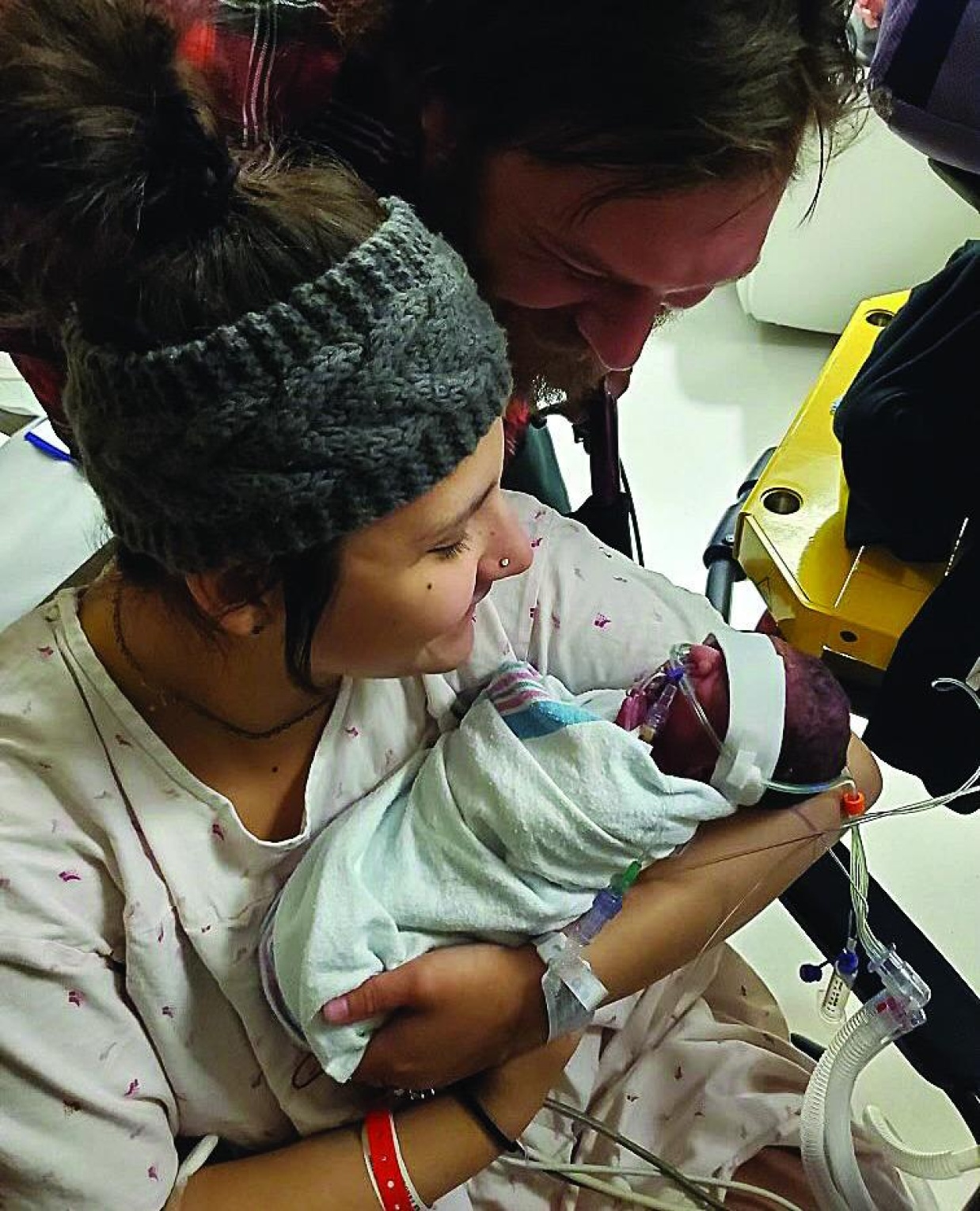
Syllis Axel Pescador was born March 19, 10 weeks early, weighing in at 3 pounds - 1 ounce and “standing” 15 inches high. (Just for comparison, a Barbie doll is 13 inches tall). Si, as he will be called, is named after his great-grandfather, Simon Pescador. Si’s great-grandmother is Gwen Pescador, his grandparents are Dave and Melissa Gurney. Briana Martinez and Andrew Pescador are Si’s parents. Andrew grew up in Lincoln.
The young couple, currently of Beloit, had three young children to care for – Andrew Pescador, Jr., age 9; Brynlee, age 3 and Cora, age 8 months. The young couple was surprised to learn they were adding another child to the family when Briana discovered she was pregnant with their son, but they were prepared for the challenge.
Briana has a history of preterm delivery, so the Pescador’s were prepared for an early delivery. When Briana began to have contractions, they made their way to the hospital.
Si was born at Salina Regional, and transferred to Wesley Hospital’s neo-natal intensive care unit. The Pescador’s make the two-hour drive as often as possible and stay at the Ronald McDonald House while staying in Wichita.
Canisters have been placed at the Bank of Tescott, Hungry Hunter, Mity Mart and Lincoln Grocery to collect donations to help the young couple with expenses such as travel, food and lodging. Organizers will also accept checks made out to David and Melissa (Pescador) Gurney.